

If you have ever gone to a business networking event, had a few good conversations, and then wondered what happens next, you are not alone.
Many professionals attend networking events with good intentions but no real plan. They show up, introduce themselves, collect a few LinkedIn connections, and hope something useful will happen. Sometimes it does. More often, the real value only appears when networking is treated as a 90-day process instead of a one-off activity.
That is where a lot of people lose momentum. They expect instant leads when what they actually need is visibility, consistency, follow-up, and trust.
For Edinburgh professionals, this matters even more. The city has a strong business community, regular events, and plenty of opportunities to meet people, but the results usually come from what you do between events, not just at them .

What results should you expect from networking in 90 days?
In the first 90 days, the goal is not to close every opportunity immediately. The goal is to create momentum.
Realistic early outcomes from business networking often include:
- more confidence talking about what you do
- stronger local visibility
- better quality conversations
- new introductions and collaborations
- a clearer understanding of where your best-fit opportunities come from
- the start of referral relationships and future sales conversations
Edinburgh Connections already frames membership value around business growth, connection, events, and practical engagement over time . That makes a 90-day article a strong fit with your existing content, especially because your blog already touches on getting value from membership and how to prepare for participation
What results should you expect from networking in 90 days?
Before your next event, decide what kind of result you actually want.
Do you want:
- more referrals?
- introductions to specific sectors?
- strategic partners?
- local visibility?
- speaking opportunities?
- more sales conversations?
Without a clear goal, every event feels busy but vague.
A simple way to stay focused is to choose one priority for the next 90 days. For example:
- meet five people in complementary service businesses
- book three follow-up coffees
- secure one speaking invitation
- generate two warm introductions to decision-makers
The clearer your goal, the easier it becomes to judge whether your networking is working.
Weeks 2 to 4: improve how you introduce yourself
One of the biggest mistakes in networking is trying to explain everything at once.
Instead of giving people your full business history, make it easy for them to remember three things:
- who you help
- what problem you solve
- what kind of introduction would be useful
That is more effective than a generic elevator pitch because it gives people a clear mental shortcut. If they understand who you help and how, they are much more likely to remember you when the right opportunity comes up later.
This is especially important in communities built around trust and repeat interaction. Edinburgh Connections already emphasizes long-term genuine connection rather than transactional encounters, so clarity and consistency matter more than sounding polished.
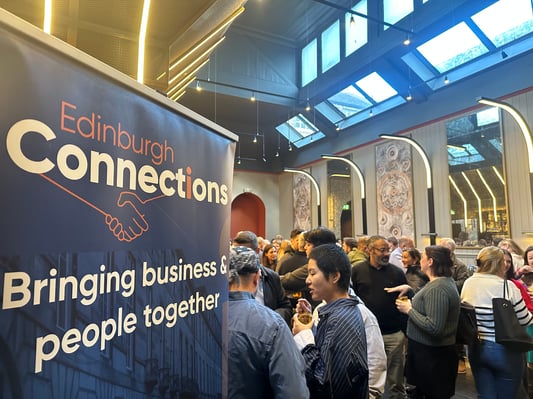
Month 1: attend with intention, not just attendance
Going to events is not the same as networking well.
To get more value from events in your first month:
- arrive with two or three conversation goals
- talk to new people, not only familiar faces
- ask better questions about business goals and challenges
- listen for collaboration opportunities, not just sales angles
- make a short note after each conversation so you remember the context later
A strong networking event creates introductions. A strong networking habit turns those introductions into relationships.
Month 2: follow up properly
This is where most networking value is either created or lost.
A useful follow-up does not need to be long or overly clever. It just needs to be relevant.
A good first follow-up message should usually:
- mention where you met
- reference something specific from the conversation
- suggest a clear next step if appropriate
- feel helpful rather than pushy
For example, you might send:
Great to meet you at the event yesterday. I enjoyed our conversation about growing through partnerships in Edinburgh. You mentioned that local visibility is a big priority this quarter, so I thought I would follow up and suggest a coffee next week.
That works because it is specific, warm, and easy to reply to.
Month 2: build trust before asking for too much
One reason networking underperforms is that people ask for referrals or business too quickly.
Trust builds faster when you:
- introduce people who may help each other
- share a relevant resource
- invite someone to an event
- comment thoughtfully on their content
- stay visible without always asking for something
This is one of the clearest advantages of a community-led business network. It gives people more than one context in which to build familiarity and confidence over time
Month 3: measure whether networking is working
By the third month, you should have enough activity to see whether your networking effort is moving in the right direction.
You do not need a complicated dashboard. Start by tracking:
- events attended
- new relevant connections made
- follow-up meetings booked
- introductions received
- collaborations started
- referrals discussed
- sales conversations influenced by networking
If the numbers are low, do not assume networking does not work. Instead, ask which part of the process is weak.
- Are you attending often enough?
- Are you speaking to the right people?
- Are you explaining what you do clearly?
- Are you following up quickly enough?
- Are you giving people an easy reason to remember you?
That is a much more useful question than simply asking whether an event felt “good.”
Common mistakes that stop members getting value
There are a few patterns that regularly slow people down:
1. Going without a goal
You are more likely to drift if you do not know what success looks like.
2. Talking too much about yourself
Good networking starts with curiosity, not monologues.
3. Failing to follow up
A good conversation means very little if it ends in the room.
4. Expecting instant ROI
Some opportunities come quickly, but many of the best ones come after repeated contact.
5. Attending inconsistently
People trust what they see regularly.
This is also why existing Edinburgh Connections content around onboarding, membership value, and event preparation provides a strong internal linking base for this topic.
A simple 90-day networking plan
If you want a practical starting point, use this:
Days 1 to 30
- attend at least one relevant event
- refine how you introduce yourself
- connect with people promptly afterward
- book one or two follow-up conversations
Days 31 to 60
- deepen the best new relationships
- identify potential collaborators and referrers
- show up again so people see you consistently
- offer value where appropriate
Days 61 to 90
- review what kinds of conversations led somewhere
- repeat the actions that created traction
- stop spending time on low-fit events or weak follow-up habits
- set a clearer goal for the next 90 days
Final thought
Business networking in Edinburgh works best when you treat it like a relationship-building system, not a single event.
Over 90 days, the combination of clear goals, better conversations, consistent visibility, and strong follow-up can turn networking from a vague marketing activity into a reliable source of opportunities.
If you want better results, do not just ask where the next event is. Ask what you want the next 90 days to produce.
FAQ
How long does it take to get results from networking?
Many people start seeing early momentum within 90 days if they attend consistently, follow up properly, and focus on relevant relationships rather than one-off conversations.
What should I do after a networking event?
Follow up within a day or two, mention where you met, reference something specific, and suggest a relevant next step if it makes sense.
How often should I attend business networking events in Edinburgh?
That depends on your goals, but consistency matters more than volume. It is usually better to attend the right events regularly than to attend many events without a follow-up plan.
Can networking really lead to sales opportunities?
Yes, but usually through trust, visibility, and introductions over time rather than instant direct sales. Networking often influences pipeline before it creates immediate revenue.
What is the biggest networking mistake?
One of the biggest mistakes is showing up without a clear goal and then failing to follow up after promising conversations.

Edinburgh Connections hosts regular Coffee Connections breakfasts and larger evening events in Edinburgh city centre. First visit is free.